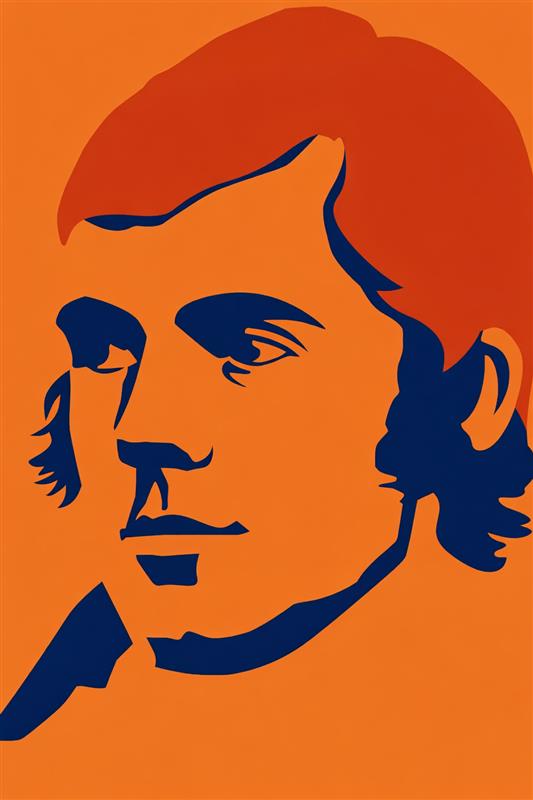
Today is Robert Burns’ birthday, so this is a slightly different kind of Leaderbeing blog. Burns has been part of my life for as long as I can remember. Like most Scottish children of the eighties, his poetry was compulsory reading at primary school. We learned it by heart. We sang it. We recited it until the rhythm lodged itself somewhere deep and permanent.
At eight years old, I entered a singing competition with John Anderson My Jo and came home utterly delighted with a highly commended certificate. I still treasure my great-great-grandmother’s book of Burns’ poems, dated 1890, its pages worn thin by generations before me who found something of themselves in his words.
These days, I stand up each January to give Burns speeches in an attempt to do two things at once: to keep his memory alive, and to keep his words alive from the grave. Because they are still profoundly relevant. Perhaps especially so in the times we’re living through now.
This year, I was honoured to be invited to address the haggis at the Scottish Lawyers in London Burns Supper, alongside an esteemed line-up that included former First Minister Nicola Sturgeon, The Times columnist Hugo Rifkind, and Dr. Pauline Mackay, Professor of Robert Burns Studies and Cultural Heritage at the University of Glasgow. I was the first woman to give the Address in the society’s thirty-nine-year history. Nicola later told us it was the first time she had ever seen a woman do so.
A week later, I gave the Toast on behalf of the Lassies at the Herriot Brown General Council Burns Supper at the Caledonian Club in London. Two fabulous evenings. And yes – who knew lawyers could let their hair down quite so readily and burl so raucously around a dance floor?
I care deeply about honouring tradition. I care just as deeply about keeping Burns Night alive, fresh, and relevant so that the next generation of Scots – and non-Scots – can benefit from his wisdom. That means being willing to challenge norms and ask harder questions about how his words live on in the modern world, and what that asks of us in how we celebrate him.
Professor Pauline Mackay’s work at Glasgow University is devoted to exactly this pursuit, and I could not be prouder that a woman of such integrity and intellectual courage is leading that charge. I have plenty to say on the subject, but I’ll leave that conversation for another day.
Today, particularly in the wake of Mark Carney’s quietly powerful speech at the World Economic Forum in Davos this week, I want to talk about Burns and character.
Burns is often reduced to tartan, toasts, and tradition. A twee portrait on a shortbread tin. A tea towel you might give your granny at Christmas.
But for me, he is so much more than that.
Burns sits front and centre in my work with leaders, and in how I try to live my life. If he were standing at the head of the table today, I don’t think he’d be asking us to look back nostalgically. I think he’d be asking us to look more honestly at who we are becoming.
Burns was not anti-faith. He was anti-fear.
He believed that what was sacred was not moral performance or public piety, but the everyday courage to live with truth, compassion, and integrity. To do what you promised. To forgive. To be honest, especially when it would be easier not to be.
He urged us to look gently upon one another. To remember that stepping aside, erring, and trying again is human. That line alone feels like a sermon we could all still use.
Because today, we have built new kinds of pulpits. Our creed is no longer delivered from stone lecterns but through social media, celebrity culture, and the twenty-four-hour outrage machine. Everywhere we are told how to live, what to think, what to wear, how to love, who to be.
No wonder it can feel as though we are standing on the brink.
In leadership, I see the cost of this every day. The quiet erosion of trust. The pressure to perform certainty. The confusion between confidence and worth. The emotional armour that people inherit without ever choosing to wear.
Burns would have none of it.
He reminds us that character is not perfection. That holiness, if we want to use that word at all, lives in our humanity – in the laughter, the longing, the imperfection, the willingness to feel fully and act with care.
Leadership rooted in character does not shout. It does not posture. It does not kneel to conditioning or expectation. It has the courage to dance with life instead.
Because years from now, when we look back, we will not take pride in how small we played it. We will remember the moments we chose truth over approval, kindness over certainty, courage over fear.
To Burns, the sacred was always human. And leadership that forgets its humanity may look strong for a while, but it never endures.
So this Burns Night, my invitation to leaders is simple.
Take a leaf out of Burns’ book.
Let prudence bless enjoyment’s cup. Tell the truth. Keep your word. Choose character.
And take a cup of kindness yet – not just for auld lang syne, but for the future we are shaping together.


